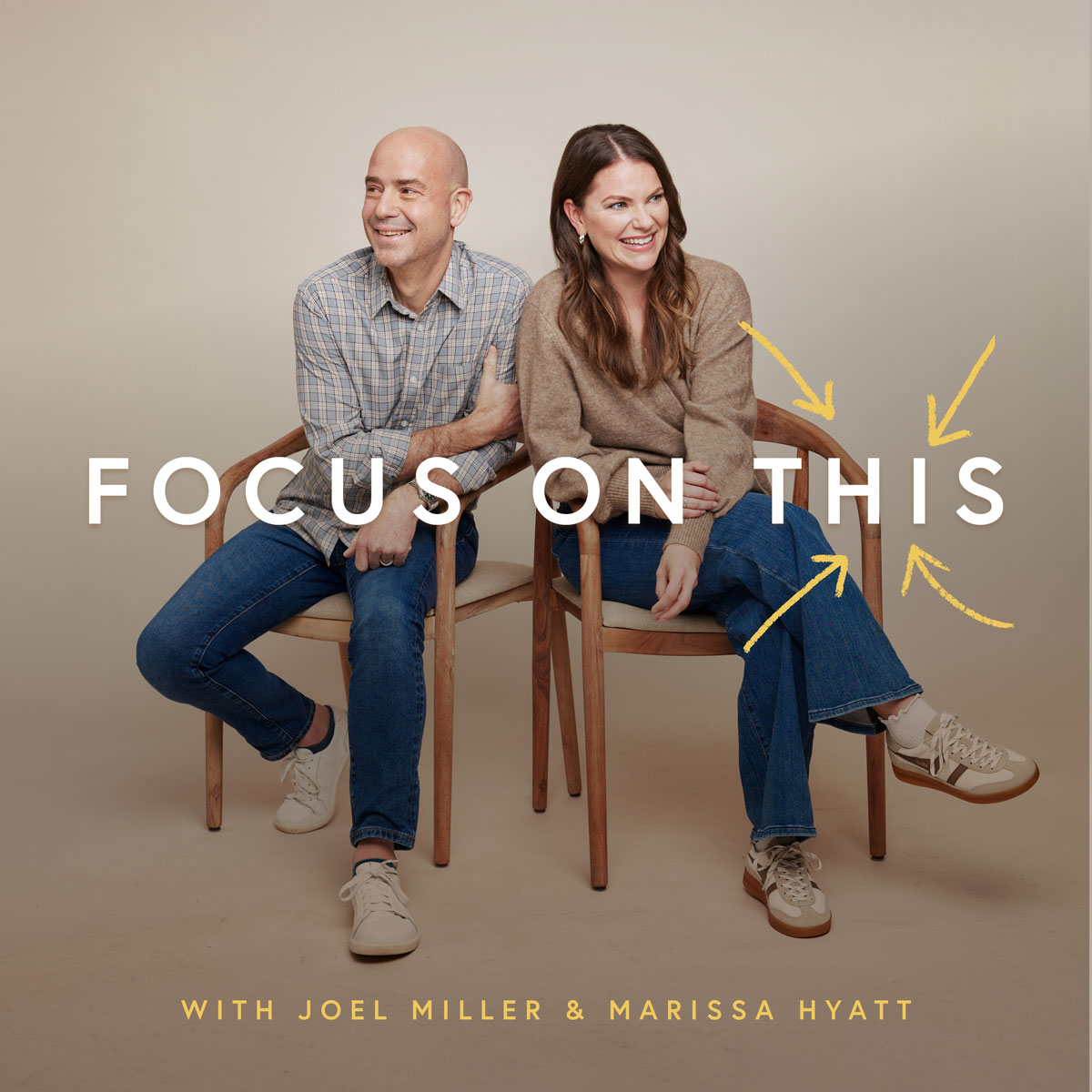
313. How to Figure Out What to Do Today
Audio
Overview
Key Takeaways
- Hope Is Not an Effective Strategy. When you start the day with a long list of tasks and a full calendar, you’re treating hope like a planning strategy: making as much progress as you possibly can and hoping it all works out. It rarely does. Real planning means taking stock of your constraints and intentionally prioritizing (or renegotiating) accordingly.
- Seize the Window. Every moment (and every season) comes with its own advantages, whether that’s face time on an in-office day, a quiet week while your team is on PTO, momentum after a big win, or lovely weather begging you to come outside. Windows of opportunity are always temporary—don’t miss them.
- Know the Ground You’re Gaining. Positive stakes are just as important as negative ones. Ask what progress you’re trying to create. Let your Quarterly Big 3 inform your Weekly Big 3, and your Weekly Big 3 inform your Daily Big 3. Think about where you want to go, not just what you want to avoid.
- Give Urgency a Say. Consequences are real, and sometimes a fire deserves your attention. So consider what’s at stake. But remember that the fallout is often more bearable than you realize and not always worth readjusting your plan for. The key is to give urgency a say without letting it run the day.
- Ask One Question Daily. Every day has unique demands and opportunities. Bring the whole Priority Filter together with one question: What is mine to do that delivers results and matters now?
Episode Transcript
Marissa: [00:00:00] Well, we are back with our Greek friends here. We’ve had a lot of Greek references lately. But this time we’re talking about two specific Greek words for time. We have chronos, which is what we know as clock time, the minutes and hours that are ticking by day after day. And then we have kairos, which is the right moment, that window of time when action really counts the most.
So most of us are planning by chronos. We look at the hours and what we have to fill them, and we fill them. But the better question for us to ask is around kairos. What is this moment calling for?
Welcome to Focus on This, the most productive podcast on the internet. I’m Marisa Hyatt.
Joel: And I’m Joel Miller.
Marissa: And this is where we remind you of [00:01:00] something you already know. It’s not about getting more things done, it’s about getting the right things done.
Joel: Both at work and in life. And today we’re talking about timing, how to figure out what matters now.
And before we actually dig into this as deeply as we’re gonna go, I just wanna go back to those two Greek words, chronos and kairos, because I have heard that you used to attend a youth group called Kairos. Is that correct? Are the rumors accurate?
Marissa: The rumors are accurate. This was probably in my late high school, early kind of college years.
Um, and there’s a church here outside of Nashville called Brentwood Baptist, and they probably still have this going on, although I haven’t been in a long time, called Kairos, and that was the name of this essentially church service that happened each week for kind of a young adults group. And, um, it was pretty amazing.
Joel: What I hear in that [00:02:00] deep history- … is that you’re, like, you’re primed for this. You’re ready.
Marissa: When I saw this, I was like, “Oh, I know about this.” We’ve talked about over the last few weeks our new favorite tool called The Priority Filter, and hopefully you’ve joined us for those episodes. If you haven’t, this is the third and final episode in this series, so I encourage you to go back and listen to those others because it will be helpful for you to have a little more context into what is involved in The Priority Filter, which are three specific questions.
And over the last few weeks we’ve dug into each of these, and we’re now on the final question. So Joel, do you wanna share what those are?
Joel: Yeah. And by the way, you’ll wanna go back to listen to these episodes if for no other reason than last episode I gave you my very worst joke to date.
Marissa: And I had a very blonde moment.
Joel: All of that happened last week.
Marissa: It was a good episode.
Joel: Yeah. It was righteous. Okay. So here are the three questions. They involve three [00:03:00] big buckets. The first is you. What are you wired to do? The second is ROI. What’s high leverage? What’s the high return kind of work that you can do? And the third is now.
What matters now? And today, that’s what we’re digging into because that’s what all these kairos references are to. What is the most relevant thing that you could be filling your time with?
Marissa: As we go through today’s episode, this is gonna be really useful for all of you who use the Full Focus Planner, and every single day you’re met with the question of what goes on my daily big three?
What do I need to be focusing on, my energy on, my time on, my attention on today? And ultimately, we’re gonna answer that.
Joel: There’s a little bit of chronos in there, but there’s a lot of kairos in there.
Marissa: Yeah.
Joel: Okay, so I kind of alluded to this a second ago, but the first element to this really involves [00:04:00] relevance, which is to say there’s a lot of stuff that you could do at any given moment.
All of us have task lists that are, you know, 15 items, 20 items, 60 items, 100 items long, however long they are. Some things are more relevant in this moment than other things, and that is what should inform what you should be doing today. You’ve gotta be able to answer that question in order to effectively prioritize.
Marissa: Yeah, and let me just give you the caveat. What we’re not talking about is just plain urgency, which I think most of us fall into, where we feel like, “Oh my gosh I just need to do whatever is on fire, whatever is the most urgent, whatever is, like, screaming at me the loudest. And I wanna make this distinction right at the start because it’s easy to fall into this trap of urgency.
And so what we’re talking about is relevance, uh, which is just a little bit [00:05:00] different than urgency. It certainly takes into account urgency, but we’re gonna talk about what relevance really means because this is how we figure out what we should be doing now. So whether it’s we’re figuring out our daily big three, what we need to focus on today, or even on what goals that we’re trying to figure out for the quarter, we need to weigh the moment that we’re in right now.
Joel: So let’s talk about how best to tease out what’s relevant and what’s not. Yeah. As I look at it, there’s four elements, and I’ll just go ahead and tease them now, and then we’ll dig into each one, okay? Constraints is one. Advantages. Positive stakes. In other words, like the progress you’re gonna make towards something.
And then the negative stakes, like the consequences for not doing something. Those are the four big things I think we need to consider. So let’s jump in and talk about the first, constraints.
Marissa: Well, [00:06:00] most people, most of us are probably every day trying to do too much. And if you’re like most people, you, in the day, kind of surprised that you weren’t able to get it all done and frankly probably really frustrated.
Joel: Which is a little weird because we all know we can’t actually do the 40 things that are on our list today.
Marissa: And just as a little exercise, look at your task list for today. You’re probably listening to this on a Monday when this episode is released. And look at your list for today, and then look at your actual calendar Because most people are not making sure that these things are in alignment.
We’re supposed to be in, like, five hours of meetings that day, and then we’re surprised that we can’t get the 20 things done that are on our task list, and we’re frustrated about it, and we feel like we failed, and we feel like we’ve let everybody down. It’s just a recipe for disaster.
Joel: I mean, this happens [00:07:00] even if you’re not careful in your full-focus planner.
Yeah. You can pick a, a daily big three that lights you up that would be amazing to actually complete, that you’re committed to completing.
Marissa: Mm-hmm.
Joel: But if you actually look over at the agenda side on the planner, you notice I’ve got this thing, I got this thing, I got this. It’s like this full bricked-up day of meetings.
There’s no time to get to your daily big three.
Marissa: But I think that there is a kind of, like, subconscious belief for a lot of us that we’re not allowed to put those meetings as part of our daily big three.
Joel: I know what you mean, and I probably did that for the first couple of years, and I even knew better.
Like, in our own Free to Focus course, which we’ve been selling since 2017, I think.
Marissa: Yeah.
Joel: We’ve got a decade of this basically. We specifically talk about the fact that there are fixed things on your calendar, i.e. meetings, and those sorts of, like, event [00:08:00] items that take up Chronos, and then there are these other things, like these movable things that kind of have to fit into the chinks of that stuff.
Marissa: Right.
Joel: And you can put that on your list, but if those two things don’t align, you’re hosed. And yet it’s really easy to forget that even when we’re working in the Full Focus Planner.
Marissa: Well, I think the key here is that hope is not a strategy.
Joel: Not usually.
Marissa: We start our day really hoping to get it all done.
We have big dreams for ourselves in the morning, and it’s like, “Yeah, of course I can do, you know, X, Y, and Z and squeeze it in in between all of this other stuff.” And the truth is, it rarely ever works like that. So if you’re gonna be effective at deciding what deserves your attention, you need to first figure out what you’re actually working with.
Joel: It’s just like budgeting, right? You’ve got constraints on your income, and once you know the constraints on your income, it’s a whole lot easier to figure out what you can spend it on.
Marissa: Yep.
Joel: Well, it’s the same with time. [00:09:00] You’ve got constraints on your day, and once you figure out what those constraints are, it’s a whole lot easier to figure out how else to spend your time.
Marissa: Sometimes when we are weighing our constraints, it causes us to reevaluate them. This is a good exercise for all of us to go through, but we may need to decide that we need to get out of specific meetings that we have been asked to be a part of, or frankly, even that we have called our own selves.
Joel: Mm-hmm.
Guilty.
Marissa: We may need to renegotiate specific deadlines and say, “Hey, I gotta, like, face reality here and it’s just not gonna happen. And so I need to go to my boss or my client or whoever it is and say, ‘Hey, we gotta figure out a different way.'” You know, sometimes we decide that we do need to make the very rare exception to work a little bit later because that is what the moment calls for.
Sometimes that is true, and we don’t need to feel shame about it. We do need to be strategic and highly intentional [00:10:00] about those times. So constraints, they really matter, and when we’re clear about what they are, we can actually figure out, do we wanna abide by these or not?
Joel: These go bigger than the day, right?
They can even be seasonal. We talked about last week, we’re in the middle of strategic planning, and strategic planning is like dropping an elephant in a bathtub. It takes up an awful lot of space. And because that is the, the season, it’s like the work that would’ve normally d- happened in Q1, Q2, Q3 has to look different than the work that happens in Q4 because it just takes up a lot of space, and that’s true about all kinds of things.
You know, like you’re either going back to s- college. You know, you’re, like, spending some extra time to get re-skilled or learn a new thing or whatever. You don’t have the same bandwidth you used to have. You welcome a new child into your home. You don’t have the same bandwidth you used to have. Like, there are just [00:11:00] seasonal constraints, too.
Marissa: And there’s benefits and challenges to be like me, single in your 30s, right? Or maybe you are recently or have gone through a divorce and you have adult kids, for instance. That looks really different than somebody who’s welcoming in their first child. Or maybe you’re in a season where you’re recently retired and you’ve got grandkids.
All of these things matter. They’re relevant because they’re gonna help us determine constraints based on the season that we’re currently in.
Joel: All right. So the second element that we need to factor Are the advantages of any given particular moment. Some moments have particular advantages. Maybe you get more face time with your boss on an in-office day, or maybe you have more flexibility with your time at an at-home day.
Maybe the weather is beautiful and you wanna take a meeting outside. I love going on a walk and doing my [00:12:00] one-on-ones by phone. I’m very Gen X, I don’t like Zoom, but I would much prefer being on my cellphone, and I’d much prefer to be out on my feet walking. Maybe most of your team is out on PTO, and you finally have a week of real total deep work time with very few interruptions.
Imagine how beautiful that would be. Or you’re traveling and you’re stuck on a plane for a few hours without Wi-Fi. Yeah, I mean, there’s like endless ways in which particular moments have particular advantages.
Marissa: There’s also, if you’re thinking on a strategic level, maybe there is some big industry benchmark that’s coming up, like for me, Black Friday.
I’m gonna take advantage of that for sure. Maybe a new leader just joined your team and is really open to fresh ideas, and so you wanna pitch those to that person. Maybe your team just hit a big win and you’ve got momentum and goodwill to spend.
Joel: Gotta strike while the iron is hot.
Marissa: [00:13:00] Yeah. Maybe a, a slower season’s coming up and, you know, you wanna tackle a big project that you’ve been putting off.
I know we do this a lot after the new year. It’s like, ugh, things finally slow down and okay, we can take advantage of that.
Joel: Mm-hmm.
Marissa: Or maybe your client just gave you glowing feedback and it’s a good time to ask them for a referral.
Joel: You know, bringing up Black Friday reminds me of something interesting about Q4 and what you just said about Q1.
In our business, Q4 is the biggest quarter.
Marissa: Mm-hmm.
Joel: And it’s also the hardest quarter, in a way, to work within because not only is there strategic planning that gets lumped into there, but you’ve got normally fall break in October, Thanksgiving in November, and Christmas in December, which functionally takes three weeks at least out of that quarter.
Yeah. And so you’re doing more work in less time, and when everybody finally comes [00:14:00] back from all of that in Q1, and the pressure’s down, and there’s a little bit of chance to breathe, it’s like such a relief to be able to dig in to one of those projects that had to be put off in Q4 because there simply was no conceivable bandwidth to work on it.
Marissa: Well, and all the more reason for those of you who are listening right now, smack dab a month into Q4, we’ve got to be highly strategic with our time and our attention this quarter. For most of us, this is the busiest quarter of the entire year. And so this priority filter that we’ve been talking about and that we’re talking about today is such a useful tool for making sure in those compressed hours that we do have at work, that we’re spending them on the things that matter the most right now, that are going to give us the highest return on our time and attention investment, and that we are really the ones who need to be doing them [00:15:00] because we are wired to do them.
Joel: Yeah.
Marissa: So that’s really what we’re talking about. So this idea of taking advantage of the current moment is really important, and we get to do that. We can be super strategic about this right now in the middle of Q4.
Joel: Just thinking about this seasonally, again, there are periods of your life where this changes.
The advantages look different. You know, when you’re young, you have more hours usually than you have money, which means that you’ve got more time to invest in certain activities.
Marissa: Right.
Joel: If you’re single, you’ve got more autonomy, uh, than someone who has a partner or a family. When you’re in your thirties, you usually enjoy better health than you would when you age.
You know, hopefully you can make some decisions in your thirties that will change that outcome. When your kids are young, it’s easier to do things all as a family than when you have a bunch of teenagers. Like, I’m in this boat right now. I can’t get anybody around the same place [00:16:00] at one time. And when you have a bunch of teenagers, they can fend for themselves much more than when they were young, which means you as an adult are freed a lot.
Marissa: Yeah.
Joel: So there’s like just different advantages that attend different seasons.
Marissa: As you’re thinking about what do I need to do today, you know you’re gonna want to weigh these windows of opportunity because they’re temporary They will close. So as you’re thinking about this moment, literally today, what is unique about it that you can make the most of?
Ask yourself this question. You don’t always have to do this to the same degree, but asking yourself these questions can be super helpful to figure out where to give your time and attention today
Joel: The third element is positive stakes. In other words, like you’re making progress. There’s a [00:17:00] winning happening here. Whenever we think about the stakes of something, we usually imagine the bad thing that’ll happen if we don’t do a thing, like the stakes are really high. Yeah. But it’s just as important to consider the good that would happen if you did make progress towards it, and that usually looks like Advancing a goal or completing a project.
What are the positive outcomes that happen when we make progress on stuff?
Marissa: So as you’re kind of considering the positive stakes, you can ask this question, which is, what is the progress you’re trying to create? What goal are you focused on advancing? If you’re setting your daily big three in the morning, what is your weekly big three that you’re trying to advance?
And if you’re focused on developing a particular skill, for instance, what does that look like today?
Joel: You just said something I wanna make sure we connect the dots on, ’cause every now and then I run into people that don’t quite have this connected. Maybe they’re on a coaching call or something like that.
[00:18:00] Your weekly big three and your daily big three and your quarterly big three live together. They’re like Russian nesting dolls. Your quarterly big three should inform your weekly big three, which should inform your daily big three. And sometimes I find people that do these things slightly independently of each other.
That’s true. And you’re like, “That’s not helping you.” Yeah. Because the only way to advance your weekly big three is to take action on individual days, you know, Monday, Tuesday, Wednesday, and your daily big three ought to roll up into completing that weekly big three, which should roll up into completing those quarterly big threes.
Marissa: We’ve shared this on the podcast numerous times over the years, but one of my favorite, I don’t know, strategies that’s so simple to do that helps with this is you can get a Post-it note and put your weekly big three on it, and every single day inside of your planner, you can just simply move that Post-it to the next day, so [00:19:00] that every single day you’re being reminded of what you’re trying to accomplish that week.
I think part of the reason we don’t do this or don’t do it consistently enough is because we don’t have visibility. We’re not looking at our weekly big three past, let’s just call it Sunday, when we’ve completed it. Right. Or worse, Friday the week before when we do it, and then by Monday, maybe we’ve kind of forgotten, and if we don’t look at it again, then it’s just, like, useless.
And so we’ve got to have visibility to be able to keep it top of mind so that we’re staying in alignment with what we’re actually trying to complete that week. So this is a really simple strategy that you can implement to help keep these things top of mind. But again, that’s gonna determine what you wanna do now.
Joel: I dog ear my weekly big three, so it just kind of tends to fall open to that spot. But anything you can do to keep it visible, and remember, what you’re looking for here is what do you win if you get it? [00:20:00] The positive stakes, and so that’s why you want to keep it visible, so you don’t lose track- Yeah … of what those positive stakes are.
Marissa: Yeah.
Joel: But of course, there’s a flip side to the positive stakes. There are the negative stakes. We already talked about that for a second there. But basically, what are the consequences Of not doing the things that matter in this moment.
Marissa: Yeah, and as it turns out, this is a very effective motivator. We mostly want to avoid pain as much as possible.
And so this looks like maybe something snowballs and it gets more difficult or costlier the longer it’s delayed. Or maybe you’re gonna get in trouble with the people who count, whether that’s your boss or your clients.
Joel: Or your spouse.
Marissa: Or your spouse, if something doesn’t get done. Maybe there’s a truly immovable deadline coming up.
That’s a good high-stakes situation.
Joel: Yeah. Sometimes these negative outcomes demand our attention suddenly, and this is where we [00:21:00] can get a little bit tripped up because now we’re talking about urgency. Mm-hmm. This is like when a ball gets dropped and we find ourselves putting out a fire, to mix our metaphors, why not?
That creates urgency. Unfortunately, the way most of us actually set our to-do lists, so urgency is a factor, but it cannot be the only factor. We’ve already talked about several other factors that matter just as much or far more- Yeah … than urgency. Urgency is real. It matters. Sometimes unexpected stuff happens.
But if we give urgency a say, too much of a say, we’re gonna let it run the day, and all these other considerations that we’ve been talking about, our capacity, the positive stakes- Mm-hmm … all this stuff just kind of like f- goes away as we respond to the fire alarm.
Marissa: And I think it’s really easy to fall into this trap because typically once we start responding to what’s urgent, it’s hard to get out of it.
Joel: Totally. [00:22:00]
Marissa: And I know this is true for me in my role as a leader. There’s often a lot of people asking- For response from me, and they need it now because they need to be able to continue their work, and they need an answer from me, they need an approval from me
Joel: Didn’t you do, like, an analysis of your Slack-
a month or so ago? What did it say? You were using chat, right? Yeah. You were in ChatGPT- Yeah … and you fed it your Slack, and you were like, “Tell me what I’m doing here.”
Marissa: Yeah, I was like, “Where is my time going?” And it basically said so much of my time is spent responding.
Joel: Mm-hmm.
Marissa: And it was like, this is not high leverage.
Like, you need to consolidate this into a specific time. And so now I have, my team knows I have about an hour blocked off every day where I review their work, where I respond to messages, so I’m not just in there all day long doing this. Because the truth is, for most of us, we’re not saving lives.
Joel: Not [00:23:00] usually.
I’m editing documents.
Marissa: Exactly.
Joel: So far, nobody has died because I have left a semicolon in that didn’t belong.
Marissa: Yeah, I’m reviewing an email or I’m giving approval on ads or something like that, right? This is not life or death situations. And when the urgent thing does come up that we need to attend to, fine.
Let’s make some room for that, but we don’t need to get stuck there. And so the more that you can kind of plan for this and put it in a container, if possible, great. Do that. Because then you’re not getting sucked back in to all the urgent things. You can stay focused on what really matters right now.
Joel: Sometimes you do the math and you realize that the consequences truly are worth responding to and you need to adjust your plan But other times you realize the consequences are, like, bearable, sometimes even negligible, and the fires you feel like you need to put out are [00:24:00] non-important, and there’s just other far more important things to do with that time.
Marissa: You know, as you’re trying to figure out where should I spend my time, we wanna figure out what’s relevant to this moment right now. What deserves my attention today? So there’s a few things that we’ve talked about just as kind of in review for you to do. So first and foremost, we wanna consider our constraints.
Don’t treat hope like a planning strategy. Doesn’t work, unfortunately.
Joel: I think it works about one out of every twenty-two times, and then because it worked so well that one time, we think, “Ah, that’ll work again.”
Marissa: Next up, we want to consider the advantages of the current moment that we’re in. So are there any new windows of opportunity that we don’t want to let close?
Joel: Then you wanna consider the stakes, both the positive and the negative. So on the positive side, what would it mean to make progress on this particular goal or [00:25:00] project or task? How would you spend the time? Like, what do you win if you dedicate time to that? And then on the flip side, the negative side, what are the consequences you want to avoid by taking action right now?
Marissa: And so when you look at all of this, you know, we wanna look at the two other things that we talked about in the two previous episodes. So you, what is yours to do? What are you wired to do? And what drives results? Okay, this is the high leverage work, that high ROI work. And then we also wanna ask, all things considered, what does this moment call for?
Kind of put in a different way, what matters now?
Joel: Every day is unique. If you open up your calendar right now to the month of November, there are thirty days in November. They’re all there. And because they all sit alongside each other, they’re in a beautiful mosaic on that Google Calendar of yours, it [00:26:00] looks like they’re all the same, but they’re not the same.
Every day has its own unique demands, it has its own unique opportunities, and every one takes its own shape given what we try to cram into it. And if we are effective at doing this, we will experience better results, which is ultimately what we’re after. The only way to get the same results as you’re currently getting or better results than you’re currently getting for less time is to become wildly more effective.
And that means focusing on our priorities. That means getting really good at using this priority filter to figure out where you, ROI, and now intersect so that you can give your time to the things that really matter and start deprioritizing the stuff that doesn’t. That is kind of the magic math on how to make this work.
Marissa: Yeah. And just to put it into a singular question that hopefully you can [00:27:00] start to ask yourself on a daily basis, you can just ask, what is mine to do that delivers results and matters now? And if you ask that every single day over the course of a year, imagine the kind of impact that you’re gonna be able to have
Joel: Thanks for joining us on Focus on This.
Marissa: This is the most productive podcast on the internet, so please share it with your friends and your colleagues and anyone else in your life, and be sure to subscribe wherever you listen or at focusonthispodcast.com.
Joel: We’ll be back here next week, where we’re going to start exploring the essential rhythms of a good life and how to tailor them to yourself.
Marissa: Until then, stay
Joel: focused.